

Learn how to detect, track, and measure LLM-driven traffic from tools like ChatGPT, perplexity, Gemini, arc, and other AI platforms using advanced referral traffic analytics.
How to Measure LLM Referral Traffic and Track AI Clicks Like a Pro in 2025

There’s a growing chunk of website traffic that’s practically invisible in your analytics dashboard. If you’ve been staring at spikes in direct traffic and scratching your head, you’re not alone. LLM platforms like ChatGPT, Gemini, and Perplexity are sending users your way, but you’re not seeing any referral traffic, source data, or tracking headers. This guide explains how to track all traffic properly across Google Analytics and Adobe Analytics.
- Behavioral Pattern Recognition: Isolate traffic that shows up as “direct” but has unusually long session durations, multiple pageviews, and appears shortly after publishing content that could be cited in llms. These are strong signals of LLM referral traffic.
- Agentic Click Filtering: Track AI clicks by monitoring user agents. While many are anonymized, some sessions reveal signatures like LLMbot, GeminiCrawler, or vague mobile identifiers used by AI browsers. Set alerts when these appear.
- Custom UTMs and redirect links: It is essential for tracking and driving referral traffic effectively. If you’re placing links in AI-targeted content (like documentation or developer blogs), embed custom UTM parameters to track traffic from utm_source=chatgpt&utm_medium=ai) Or use link shorteners that let you track the source by device or origin.
- Server Log Audits: Your raw server logs often hold hidden clues. Look for request headers or referrers like Bing or Google to analyze traffic coming from LLMs. ChatGPT or Perplexity Pair this with Accept-CH headers and server-side scripts to log the origin context, where possible.
- Use AI Search Analytics Setup Tools: If you’re ready to scale, consider Snowplow, ELK, or custom middleware built for LLM click-path tracking.
Why AI Search Visibility Is the New SEO Battleground

The Rise of LLM-Driven Traffic Sources
Generative engines like ChatGPT, perplexity, and Gemini are rapidly becoming default AI search tools. As of 2025, they now influence a significant portion of organic traffic and user behavior.
These platforms don’t behave like traditional search engines. They prioritize answers, not listings, especially when driven by AI SEO strategies. And when users get your link in an AI response, it’s often copied and pasted directly, so many visits arrive without a Referer header.
What Makes LLM Traffic Invisible to Google Analytics
Here’s why you’re seeing “direct / none” instead of real AI referral traffic:
- LLMs don’t send referrer headers. Users manually open links.
- Some privacy-focused browsers may strip referrers; Arc and Ghostery Dawn currently rely on system WebKit and don’t add extra anonymisation.
- Voice assistants drive traffic via bare URLs without tagging.
- Privacy protocols prevent context from being shared, which can hinder understanding of traffic from LLMs.
This means your total traffic numbers might rise, but you’ll miss critical attribution.
Identifying the Hidden Funnel: How AI Tools Actually Send You Traffic

4 Primary Click-Paths from LLMs to Your Site
- Copy-link behavior from ChatGPT or Gemini can significantly influence and drive referral traffic.
- smart browsing from agentic browsers like arc or fellou
- embedded citations from perplexity AI
- voice assistant queries opening your site directly
How to Recognize Agentic Clicks in the Wild
Start tagging referral traffic in Google Analytics using these patterns:
- No source + high engagement metrics
- Generic or missing user agent values
- Traffic surges when LLM platforms mention your brand
This is the first step in an effective AI search analytics setup to measure LLM traffic.
Implementation Guide: Tagging LLM Traffic in GA4, Adobe, or ELK
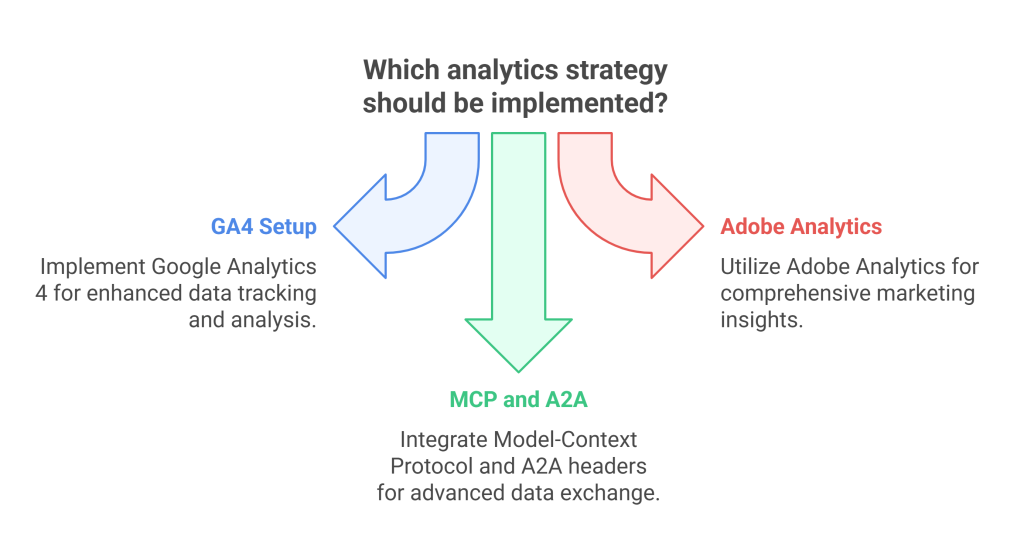
GA4 Setup: Custom Channel Grouping + Regex Filters
To properly tag and segment AI-driven visits in Google Analytics 4, create a custom channel group that isolates traffic from tools like ChatGPT, Perplexity, and Gemini.
Steps:
- Go to GA4 Admin > Custom Channel Group
- Create a new channel labeled: “AI Referral Traffic”
- Use these rules:
- Session source matches regex:
(openai\.com|perplexity\.ai|gemini\.google\.com|arc\.net) - (Optional but recommended) Session medium equals: referral
- Session source matches regex:
This setup helps GA4 recognize and categorize traffic originating from AI platforms, turning previously invisible “direct / none” sessions into a measurable channel. Avoid relying on user-agent strings here, as GA4 doesn’t expose them directly in standard reporting.
Adobe Analytics Tagging Playbook
- Use tag manager to inject Accept-Ch headers.
- Enable fallback tagging for stripped referral traffic.
- Create calculated metrics for tracking AI traffic engagement.
Using Model-Context Protocol (MCP) and A2A Headers
To track LLM click-paths precisely:
- Enable headers: Accept-CH: MCP, A2A.
- Store data like: Model=ChatGPT4.5; Context=Finance; Origin=AnswerBox
- Use this for LLM analytics dashboard service and geo optimization.
These headers are still draft proposals; GA4/Adobe does not recognise them yet. Treat this as a future-proofing idea, not current production advice.
Building the Dashboard: What Metrics to Track for LLM Optimization

KPIs to Prove AI-Driven Visibility
To justify LLM SEO budgets and demonstrate ROI from generative engine optimization, here are the KPIs you need to track:
- LLM Answer Share: The percentage of high-intent queries where your site is referenced within the top 3 citations in ChatGPT, Gemini, or Perplexity can be measured using Google Analytics 4.
- CTR Delta from LLM Referrals: Compare CTR for AI-generated links versus traditional organic results for the same keyword clusters.
- Dwell Time of LLM Sessions: Higher engagement often indicates that AI-referred users are better qualified. Use GA4 session duration and scroll-depth metrics.
- Content Citation Frequency: Track how often your blog, product, or help articles are being quoted in LLM answers.
- Channel Attribution Shift: Measure the migration of “Direct / None” traffic into your custom “AI Referrals” channel over time.
Tracking these metrics builds a strong narrative around content visibility, channel performance, and the evolving behavior of your digital audience.
Tools to Build Your LLM Analytics Dashboard
- GA4 + BigQuery for LLM click-path tracking
- Adobe Analytics virtual reports
- ELK stack for regex and custom attribution logging
Best Practices to Tag, Track, and Optimize AI Referral Traffic

1. Tag Like It’s 2025
- Use consistent utm_source=chatgpt and utm_medium=ai in URLs shared in AI-optimized content.
- Create custom channel groups in GA4 to segment this traffic.
- Implement regex filters for known AI origin domains (chat.openai.com, gemini.google.com, perplexity.ai, etc.).
2. Activate Accept-CH and MCP Headers
- On every landing page, serve headers like Accept-CH: A2A, MCP to request contextual model metadata.
- This allows you to collect details about the source LLM, the content type (like the answer box), and possibly the prompt category.
3. Educate Your Data Team
- Train your analytics engineers to spot anomalies in direct traffic.
- Equip them with tools like regex parsers, OpenTelemetry logs, and MCP parsers.
- Regularly revisit and refine filters based on how LLMs evolve.
4. Balance Tracking with Privacy
- Avoid fingerprinting or device-based tracking that violates AI tools’ TOS.
- Stay compliant with data privacy laws by anonymizing MCP/A2A data when logged.
5. Monitor, Iterate, Improve
- Create weekly reports for AI traffic share, AI-driven content impact, and engagement gaps.
- Run A/B tests to compare conversion behavior between traditional SEO and LLM-originated traffic.
Forecasting the Future: LLM Attribution in 2025 and Beyond

The evolution of LLM attribution is moving faster than the infrastructure built to measure it. Here’s what to expect:
- Standardization of MCP and A2A Headers: Major AI platforms are beginning to support contextual tagging and referrer pass-through. Expect Google, OpenAI, and Meta to roll out attribution-friendly headers that respect privacy but enable tracking.
- AI Native Traffic Channels in Analytics Platforms: GA4 and Adobe will likely introduce “AI Source” and “LLM Referral” as default categories as usage scales.
- Board-Level Attention on LLM Metrics: As executives become aware of the traffic shift toward LLMs, marketing leaders will be tasked with defending or growing GEO budgets. Dashboards will need to evolve into strategic planning tools.
- Voice and Mixed-Modal Traffic Integration: Expect a surge in traffic from AI-generated voice interfaces and blended experiences (text-to-click, voice-to-URL), requiring smarter, cross-device tagging frameworks.
LLM Attribution Checklist: Track AI-Driven Referral Traffic Like a Pro
Your 7-Day Tracking Setup Plan
- Day 1: Audit direct traffic spikes
- Day 2: Build regex filters for LLM platforms
- Day 3: Create ga4 custom channel group
- Day 4: Inject accept-ch headers for MCP
- Day 5: Setup Adobe metrics or Elk dashboard
- Day 6: Measure AI answer share of voice and CTR
- Day 7: Review with growth team, validate metrics
Conclusion: Turning “Dark Traffic” into Boardroom-Ready Metrics
AI search is changing the way traffic is generated, measured, and valued. Tools like ChatGPT, perplexity, and Gemini now influence traffic volume, but without proper tagging, you’re flying blind. Use this guide to track AI, optimize LLM traffic, and measure LLM referral traffic accurately. It’s time to stop underreporting AI-driven visibility and start making it part of your core digital marketing playbook.