

Introduction
Many folks in marketing get stuck on the same personal problems. They follow a traditional persona outline that never feels like it connects with the real world. When you rely on guesswork and outdated demographic information, it’s easy to overlook the actual data that reveals what your buyer really wants. This guess-heavy approach can hurt your marketing strategies right out of the gate. But don’t lose hope. Data-driven attribution can fix the gap, and it often boosts ROI in ways that catch everyone’s attention.
Why Traditional Buyer Personas Often Fail

The Limitations of Generic Templates
A typical traditional persona might say something like: “This buyer persona is 35 years old, works in marketing, and enjoys reading about strategy.” However, that approach to persona development can feel vague. It doesn’t tap into real insight or data-driven persona research. As a result, you might be missing the heart of your target audience. Personas may appear complete on paper, yet they lack actionable details. When it comes time to create marketing strategies, those personas can help only a little because they don’t reflect the customer’s true needs. If your existing customers seem miles apart from the persona profile you came up with, that’s a big sign that something’s off.
Personas vs. Real Data: Bridging the Gap
Some research suggests that around 68 percent of marketers say a traditional persona isn’t very effective if there’s no data backing it. A persona that isn’t fueled by analytics data or by qualitative and quantitative data might look polished but fail to connect with real buyers. When you align your persona with actual data from your marketing tools, you get a clearer picture. You can see how your buyer moves through each stage of the customer journey and how that journey changes over time.
Introducing Data-Driven Buyer Personas
What Exactly Are Data-Driven Personas?
Data-driven buyer personas are built by blending quantitative user data with qualitative personas research. Rather than making assumptions about everything, you utilize pertinent data from analytics tools to look at who’s clicking, who’s converting, and who’s bouncing. In a side-by-side comparison, a typical persona may adhere to rudimentary demographic data, whereas a data-driven persona delves deep into actual details. This disparity highlights where your marketing can excel.
Why Attribution Data is Your Secret Weapon
Attribution is gold for building data-driven persona systems. If you rely on first-touch or multi-touch models, you’ll spot exactly how a buyer persona interacts with each part of your marketing funnel. One SaaS marketer harnessed analytics data from an online analytics tools platform and discovered which touchpoints mattered most. That understanding allowed them to refine their persona approach in a manner that pushed the needle. When you marry persona development with accurate data-gathering techniques, your customer base begins to notice messaging that directly addresses their pains.
Step-by-Step Guide: Creating Data-Driven Buyer Personas
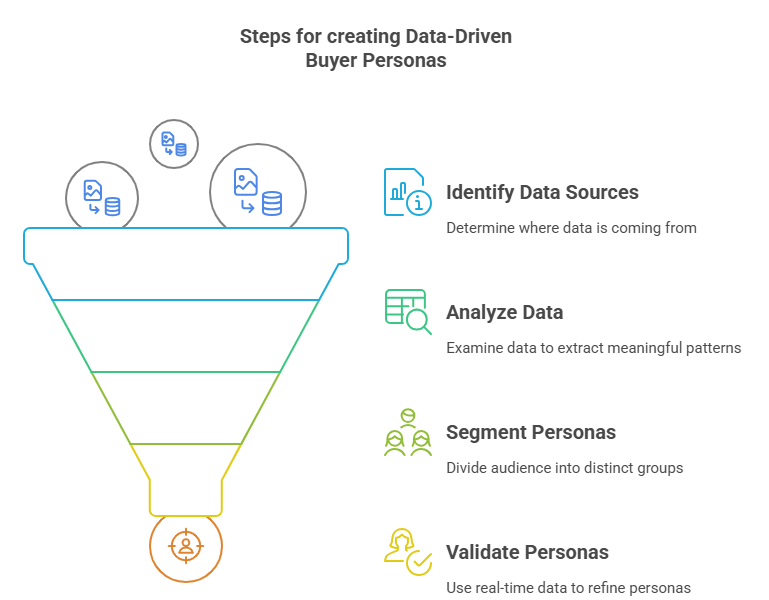
Step 1: Identify Key Attribution Data Sources
Look at data sources like Google Analytics, CRM dashboards, or marketing automation platforms. These tools gather a lot of data about who shows up and how they behave. You can also gather public data or analyze the data from user analytics. The trick is to choose the metrics that show engagement: page visits, lead form submissions, or bounce rates. That way, you’re looking at the analytics data that assists you in building data-driven buyer personas.
Step 2: Analyze Your Attribution Data
Dive into a mix of quantitative and qualitative data. You might run surveys (qualitative) and then match the feedback to your Google Analytics numbers (quantitative). This approach to persona involves asking questions like “Why did someone sign up?” or “What blocked someone from converting?” Tools like Delve AI can simplify automatic persona generation and data analysis so you can see what your persona looks like as an actual representation of your ideal customer. The combination of qualitative and quantitative data is powerful when building a solid buyer persona.
Step 3: Segmenting and Building Your Personas
Segmentation is where persona work really takes off with data. You segment your customer data into groups such as frequent customers, high-value leads, or product interests. Persona segmentation can lift targeting success by about 75 per cent, based on data from different persona studies. Then, define the personas by writing down pain points, triggers, and psychographic characteristics that fit your customer persona. This persona-building process enables you to visualize the phase of the customer journey of each group.
Step 4: Validate and Adjust Personas Using Real-Time Data
Personas become more accurate when you keep an eye on new analytics. With continuous insight, you can revise each data-driven persona every quarter or even monthly. One quick case study: a B2B marketing team spotted that certain prospects came from niche forums, so they shifted their approach to persona.
Connecting Marketing Attribution to Persona Development
Why Attribution and Persona Strategies Must Align
When you put attribution data and persona creation together, you hone your overall strategy. You notice how each persona is a slice of your audience and how those people respond to a specific campaign. That clarity equates to more ROI, better message clarity, and improved user experience. In one case study, a frazzled marketer leveraged multi-touch attribution to learn the entire journey a user went on before converting into a customer. That enabled them to relate the data to build marketing that addressed each person’s motivation.
Choosing the Right Attribution Models
There isn’t a one-size-fits-all model. Some folks pick first-touch for simplicity, while others need a multi-touch model. Figure out what fits your marketing style. If you’re in B2B, you might prefer a multi-touch approach because it captures all the micro-moments that lead up to the sale. For busy teams, a simpler model that focuses on two or three main touchpoints might be enough.
How Data-Driven Personas Improve Marketing Outcomes

Enhancing Customer Journey Understanding
When you create data-driven personas, you can map out the customer journey with more accuracy. If your buyer persona visits your site multiple times before they fill out a form, that’s a clue you might need to warm them up with educational content. Real data shows how your target audience actually moves from awareness to purchase. Some marketers have seen a 40 percent higher in conversions just by tailoring the persona to the right stage of the customer journey.
Increasing Campaign Effectiveness
They often wonder how data-driven buyer personas can ignite monumental campaign changes. One team that used data to grasp your target initiated ads, particularly for select groups. After tracking the attribution results, they discovered a 35 percent rise in qualified leads. Through an emphasis on a data-informed method of persona creation, they discovered new language for their customers and escaped past habits.
Common Mistakes and How to Avoid Them

Mistake #1: Overcomplicating Your Persona Development
Some people believe that you should have a hyper-detailed persona that contains all the conceivable information. That frightens the team and brings you to a crawl. Streamline your persona-building process and emphasize the areas most important, such as pertinent data about purchasing triggers or significant pain points.
Mistake #2: Ignoring Attribution Data Insights
If you never look at your analytics platform or skip your scheduled persona audits, you risk falling behind. Use buyer personas that reflect fresh analytics data, and you’ll know exactly when preferences shift. Without that data, your marketing might miss the mark.
Real Tools for Real Results
Some analytics tools can turbocharge your persona development. Delve AI, Google Analytics, and HubSpot are big players when you’re ready to collect data for data-driven personas. Each one offers dashboards to see your quantitative user data, gather actual data about user interactions, and highlight specific segments you can target. A quick tip: set up your data collection so that it updates automatically. Then, you’ll have near real-time visibility of where your persona stands.
Frequently Asked Questions (FAQ)
Can data-driven buyer personas be useful for smaller businesses?
Absolutely. Even small businesses gather some form of user data, like sales figures or email engagement stats. If you focus on the right data sources and keep your segmentation simple, you can see big benefits from data-driven personas.
How often should we update our data-driven persona strategy?
Try checking key metrics every quarter. If you notice a big shift in buyer behaviour, update sooner. Consistency helps you catch changes, but you don’t want to get stuck in constant revisions.
Which analytics tools work best for creating data-driven personas?
Google Analytics is popular for web data, while CRM platforms and marketing automation tools help you track deeper customer interactions. Delve AI can also assist with persona generation based on quantitative data.
What if we don’t have enough data to create data-driven buyer personas?
Start with what you do have. Smaller data sets can still show patterns if you look for them. You can also gather additional insights through surveys, interviews, or by tracking user behaviour on specific landing pages.
Do data-driven buyer personas replace traditional persona elements?
Not really. You can still include demographic information or psychographic details, but the difference is that you base those details on actual data, not assumptions. That blend helps you get the best of both worlds.
Conclusion: Action Over Theory
Data-driven personas are considered game changers because they use data-driven personas to shine a light on exactly who you’re talking to and what they want. This approach to persona has been proven to boost engagement and drive better results in B2B marketing. If you create data-driven buyer insights, you end up with something that actually impacts your bottom line. Instead of old, traditional persona placeholders, you’ll see a real difference in your marketing outcomes.