
In the complex B2B SaaS marketing landscape, knowing what drives conversions is critical. But too often, businesses are left wondering, “Why are we spending so much on marketing and yet still unable to determine what’s working?” This is often due to outdated. Effective attribution models misrepresent the customer journey and result in misdirected budgets and lost opportunities. To navigate this complexity, embracing data-driven ROI tracking becomes essential.
Stay with us to uncover how to diagnose and rectify your B2B SaaS attribution challenges.
The Attribution Problem in B2B SaaS Marketing
What is B2B SaaS Attribution?
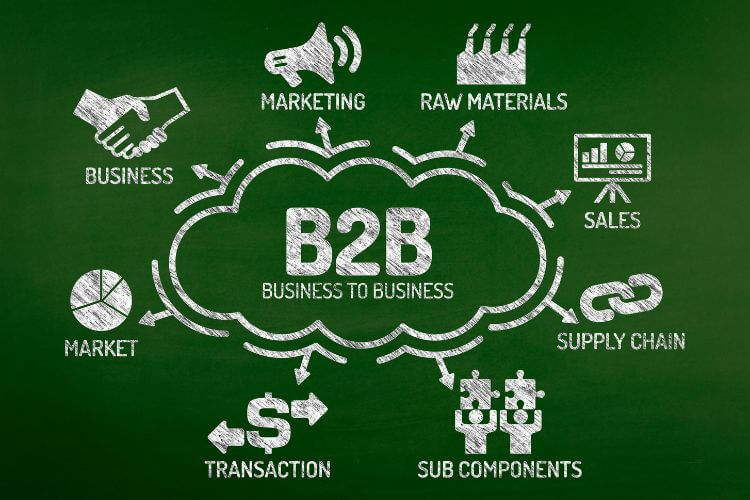
B2B Saas marketing attribution is the analytical process of assigning value to each marketing touchpoint throughout the customer journey. In the context of B2B SaaS, this involves understanding how various interactions, be it emails, webinars, or whitepapers, influence a prospect’s decision to become a customer.
Legacy models, such as first-touch or last-touch attribution, give all the credit to one interaction, either the first or last touchpoint.
Multi-touch attribution, on the other hand, acknowledges that several engagements lead to a conversion, allocating credit across different touchpoints. For instance, HubSpot transitioned from a last-touch to a multi-touch attribution model, acknowledging the multifaceted nature of customer journeys.
Why is Attribution So Difficult in B2B SaaS?
- Longer Sales Cycles: B2B SaaS deals often extend over several months, with an average of 266 touchpoints required to close a deal
- Multiple Decision-Makers: Buying decisions usually involve several stakeholders who interact with diverse content and channels.
- Cross-Channel Interactions: Prospects engage through various platforms emails, social media, and webinars, making it challenging to track their journey comprehensively.
- Dark Social & Offline Interactions: Conversations in private channels like Slack or during in-person events often go untracked, yet they significantly influence decisions.
A study by Dreamdata revealed that B2B saas over 60% of the buying process before engaging a vendor.
Where Attribution Breaks Down in B2B SaaS Marketing
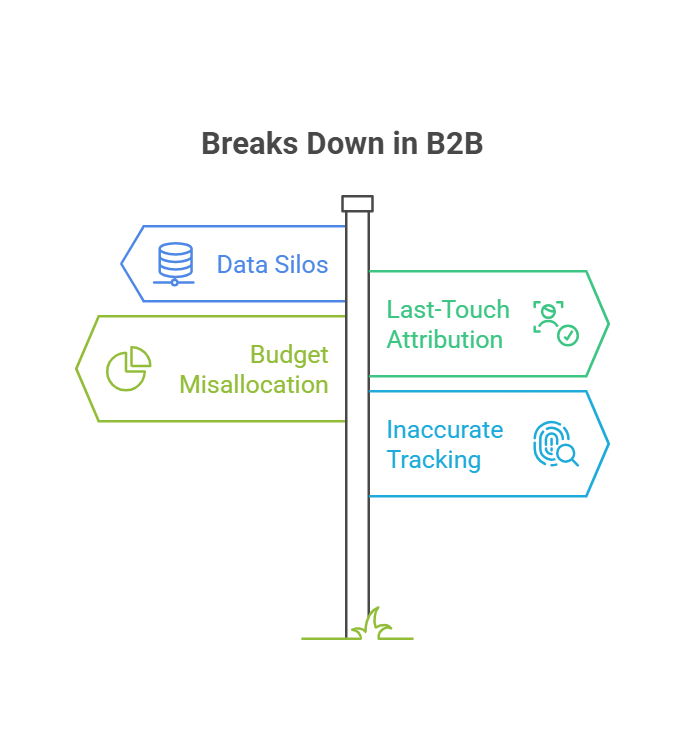
Marketing and Sales Data Silos
Problem: The dissolution of conventional attribution strategies in multifaceted B2B situations. Fragmented systems among marketing and sales groups result in siloed data, blocking an integrated picture of the customer journey.
Example: While the marketing team utilizes HubSpot, the sales department relies on Salesforce, resulting in inconsistent data tracking.
Solution: Having an all-in-one attribution platform, like Dreamdata or Bizible, can aggregate information, offering a unified view of touchpoints.
Relying on Last-Touch Attribution
Problem: 75% of companies are using a multi-touch attribution model, which overlooks the influence of earlier interactions
Why It’s Ineffective: This method overlooks the effect of first interactions, for example, blog visits or social media contacts, resulting in biased performance measurements.
Solution: Adopting multi-touch attribution models offers a comprehensive view, acknowledging all interactions that contribute to a conversion.
Misallocating Marketing Budget
Problem: Without accurate attribution, companies may overspend on channels that appear effective but don’t drive conversions.
Example: LinkedIn Ads might generate high click-through rates but result in few direct conversions. However, they play a crucial role in nurturing leads that eventually convert through other channels, especially in email marketing.
Solution: Using revenue attribution models enables marking marketing spending against actual revenues, to ensure money is invested into channels that actually make a difference in the bottom line.
Inaccurate Tracking of Anonymous Visitors
Problem: A significant portion of website visitors remain unidentified, making it difficult to assess their journey across multiple marketing channels.
Solution: Employing tools like IP tracking and intent data platforms (e.g., 6sense, Clearbit, RB2B) can help identify and monitor these visitors, enriching attribution data.
How to Fix B2B SaaS Attribution Issues
Adopt Multi-Touch Attribution Models
Comparing popular models, including custom attribution and last touch, can help B2B marketers understand their strategies better.
- Linear Attribution: Distributes equal credit across all touchpoints, which can be beneficial for understanding customer journeys in CRM systems.
- Time Decay: This model helps marketers run marketing attribution by giving more credit to recent interactions. Assigns more value to interactions closer to the conversion, making it essential to consider all marketing activities in B2B attribution.
- U-Shaped: Emphasizes the first and last touchpoints, with less credit to those in between.
- W-Shaped: Gives weight to the first touch, lead creation, and final conversion points.
- Data-Driven Attribution: Utilizes algorithms to allocate credit based on the actual impact of each interaction.
Choosing the Right Model:
- Shorter Sales Cycles (<3 months): Linear or U-shaped models may be appropriate.
- Longer, Enterprise-Level Deals (>6 months): Data-driven attribution offers nuanced insights.
Example: Companies adopting data-driven models have reported a significant increase in ROI visibility
Connect Marketing & Sales Data
Steps to Integration:
- Unify Platforms: Integrate CRMs, analytics tools, and marketing automation systems to ensure seamless data flow.
- Implement UTM Parameters: Consistently use UTM codes to track the source and medium of each interaction.
- Leverage AI-Driven Tools: Platforms like Dreamdata and HubSpot offer AI
Measure ROI of Dark Social & Offline Channels
Problem: B2B engagement happens on untrackable channels (Slack, Zoom, LinkedIn DMs, podcasts).
Solution:
- Self-Reported Attribution: A method that integrates CRM insights to emphasize the first and last touchpoints, with less credit to those in between.
- Dark Funnel Analytics: Use Metadata.io or HockeyStack for insights.
Example: Metadata.io’s attribution model uses a b2b attribution approach, including LinkedIn dark social insights for better tracking. This approach helps marketers track indirect impact across various marketing channels.
Test and Optimize Attribution Models Regularly
Steps to Improve Attribution Accuracy:
- Run A/B Tests to compare different attribution models.
- Monitor Customer Touchpoints Monthly and adjust accordingly.
- Compare Paid vs. Organic Traffic to identify high-performing channels.
The Future of B2B SaaS Attribution

AI-Driven Attribution Models
Predictive analytics and AI-driven attribution tools will automate cross-channel attribution.
Example: Google’s AI-powered data-driven attribution. Using a marketing attribution platform improves accuracy in measuring the effectiveness of different touchpoints. Compared to rule-based models.
Privacy-First Attribution & Cookieless Tracking
Problem:
Google is eliminating third-party cookies. By 2024, B2B marketers must adjust their efforts to incorporate complex marketing attribution models.
Solution:
- First-party data strategies
- Server-side tracking
- Contextual targeting
Blockchain for Attribution Transparency
Companies like Google Analytics and others are instrumental in b2b attribution. IBM & Adobe are experimenting with blockchain-based marketing attribution to eliminate ad fraud and increase transparency; effective attribution is crucial.
Conclusion
Attribution in B2B SaaS marketing is a complex but critical process that determines how effectively marketing efforts drive revenue, especially when using a B2B marketing attribution platform. The primary challenge lies in the long sales cycles, multiple decision-makers, cross-channel interactions, and the rise of dark social, all of which make traditional attribution models unreliable. Many companies still rely on outdated last-touch attribution, leading to misallocated budgets, inaccurate performance tracking, and under-optimized marketing strategies.
To overcome these challenges, adopting multi-touch attribution models provides a more holistic and data-driven approach, ensuring each touchpoint is accurately credited for its role in conversion. Additionally, integrating marketing and sales data, leveraging AI-driven analytics, and tracking anonymous visitors using intent data platforms can significantly enhance attribution accuracy. The future of B2B SaaS attribution will be AI-powered, privacy-first, and increasingly reliant on blockchain for transparency, ensuring marketers can allocate budgets efficiently and optimize campaigns for maximum ROI. To stay ahead, businesses must embrace these advanced attribution models and continuously refine their strategies based on real customer data. Want to improve your B2B marketing attribution?
Frequently Asked Questions (FAQ)
1. What is B2B SaaS marketing attribution?
B2B SaaS marketing attribution is the process of identifying and assigning value to different marketing touchpoints that contribute to a customer’s journey before conversion. It helps businesses understand which marketing efforts are driving revenue and optimize their strategies accordingly.
2. Why is marketing attribution difficult in B2B SaaS?
Marketing attribution in B2B SaaS is challenging because of long sales cycles, multiple decision-makers, fragmented customer journeys, and untrackable dark social interactions (such as word-of-mouth or private conversations on Slack or LinkedIn). These factors make it hard to pinpoint which touchpoints influenced a conversion.
3. What are the different types of marketing attribution models?
The most commonly used marketing attribution models include last touch, first touch, and custom attribution tailored for B2B marketers.
- First-touch attribution: Gives all credit to the first interaction.
- Last-touch attribution: Assigns all credit to the last interaction.
- Linear attribution: Distributes equal credit across all touchpoints.
- Time-decay attribution: Gives more weight to interactions closer to conversion.
- U-shaped attribution: Assigns more credit to the first and last touchpoints.
- W-shaped attribution: Credits the first touch, lead creation, and final conversion.
- Data-driven attribution: Uses a marketing attribution platform to dynamically assign credit based on real customer behavior and CRM data.
4. What is the best attribution model for B2B SaaS companies?
There is no one-size-fits-all model. However, multi-touch attribution models (such as W-shaped, time decay, or data-driven attribution) tend to be the most effective for Longer sales cycles that require a robust attribution for a b2b strategy to track progress effectively. And complex buyer journeys in B2B SaaS.
5. How can I track dark social and offline interactions in attribution?
Since many B2B buying decisions happen in private channels like Slack, WhatsApp, direct conversations, or industry events, tracking these interactions can be difficult. To bridge the gap:
- Use self-reported attribution (ask leads how they found you in lead forms).
- Monitor direct and organic traffic spikes after social mentions.
- Implement dark funnel analytics tools like Clearbit, 6sense, or Metadata.io to gather intent data.